
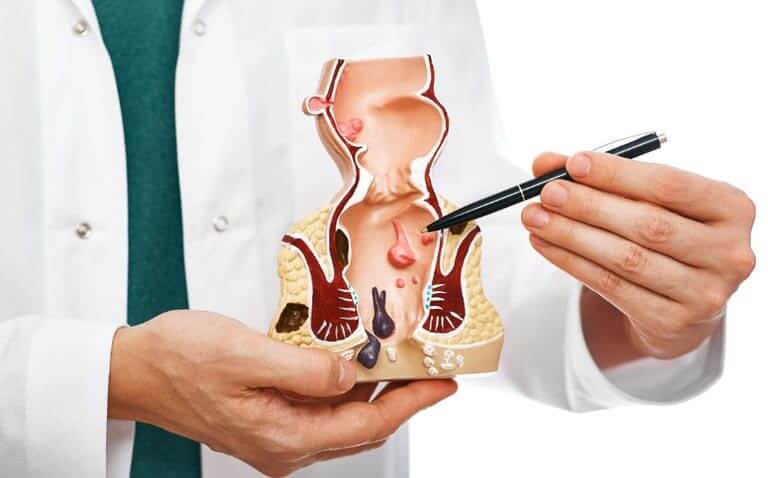
Hemorrhoids are swollen, protruding veins in the anus and the lower rectum. They develop as a result of straining during bowel movements or intense pressure on these veins. Hemorrhoids are a very common condition—affecting approximately half of all adults—and are frequently seen by the age of fifty. They are classified into four grades: Grade I (located inside the anal canal); Grade II (protrude during bowel movements but retract spontaneously); Grade III (protrude during bowel movements and require manual repositioning); and Grade IV (permanently prolapsed outside the anus).
Causes of Hemorrhoids
The exact cause of hemorrhoids is unknown; however, certain factors increase the risk of developing them, such as chronic constipation, pregnancy and vaginal delivery, and high blood pressure.
Symptoms
The signs and symptoms of hemorrhoids usually depend on the type.
External Hemorrhoids:
These are located under the skin around the anus. Signs and symptoms may include: itching or irritation in the anal region, pain or discomfort, swelling around the anus, and bleeding.
Internal Hemorrhoids:
These are located inside the anus. They are usually neither visible nor palpable and rarely cause discomfort. Straining or irritation during bowel movements can lead to painless bleeding; you might notice small amounts of bright red blood on toilet paper or in the toilet bowl. A hemorrhoid that prolapses (protrudes) from the anus causes pain and irritation. Thrombosed Hemorrhoids:
When blood pools in an external hemorrhoid and forms a clot (thrombus), it can lead to severe pain, swelling, inflammation, and a hard lump near the anus.
When to See a Doctor
Consult your doctor if you experience bleeding during bowel movements or if your hemorrhoids do not improve after a week of home care. Also learn about: Laser surgery for anal fissures